Sri Lanka Adventure Holidays: The Best Active and Adventurous Things to Do
Quick answer: Sri Lanka rewards the active traveller like few other places in Asia, chiefly because so much happens in so little space. In a fortnight you can walk through tea country, run the rapids of the Kelani River, learn to surf, watch blue whales and look for leopards, then finish on a mountain railway as the mist rolls in. The best active holidays in Sri Lanka link two or three bases (Kitulgala, Ella and the south coast make a handsome trio) and follow the seasons: roughly December to April for hiking and the south and west coasts, May to September for the east coast and its surf. An adventurous Sri Lanka holiday that doesn’t feel like a forced march needs 10 to 14 days.
Is Sri Lanka good for adventure holidays?
Sri Lanka has long marketed itself as a place of beaches and temples, and it is. What visitors discover soon after landing is how quickly that picture is complicated. The island is roughly the size of Ireland, yet its landscapes change with an almost theatrical briskness: rainforest gorges, cloud-wrapped tea country, dry-zone scrub where elephants wade into reservoirs, and a coastline that alternates between surf breaks and glassy coves. You can start a day on a summit at dawn, spend the afternoon in a raft, and take dinner barefoot on a beach.
It is also a forgiving place to begin. With a decent guide, most activities are open to beginners, so a family with teenagers and a pair of confident walkers can share the same itinerary without anyone feeling short-changed. The one complaint that crops up again and again in traveller accounts is the climate. Heat and humidity are the real opponent here, and the standard remedy is the early start, so pack your enthusiasm for alarm clocks.
What are the best adventure activities in Sri Lanka?
Hiking and trekking
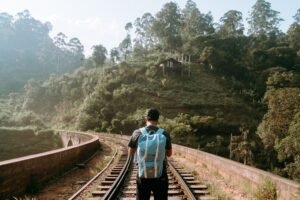
The hill country is where Sri Lanka’s walking comes into its own. Begin in Ella with Little Adam’s Peak, the gentle overture: a short stroll through tea bushes to a viewpoint above the Ella Gap, easy enough for children and for anyone nursing tired knees. Travellers routinely call it the best return for the least effort, and its views are close to those from Ella Rock opposite, with the added bonus of Ruwana Falls in the frame. Ella Rock is the more serious proposition, a round trip that takes around four to five hours and that most visitors rate as noticeably harder. If you want to be there for sunrise, hire a guide, since the route is difficult to follow in the dark. A plan many walkers like: Ella Rock in the morning, Little Adam’s Peak in the afternoon, when the easier climb is a welcome reward.
Farther west, Adam’s Peak (Sri Pada) is the pilgrimage climb, and the one that tends to loom largest in people’s memories. Pilgrims of several faiths revere the footprint at the summit, and the ascent is made at night so that you arrive for sunrise. Travellers put the count at well over 5,000 steps, and most say to allow three to five hours. The reports that follow are remarkably consistent. The steps feel relentless in the final stretch. The summit is cold and windy, and many climbers are caught out by sweat-soaked clothes and a long wait for dawn, so a proper extra layer matters. The payoff is the sunrise, when the mountain throws a perfect triangular shadow across the clouds. January and February weekends and Poya days are the busiest, and visitors who climbed on a weeknight in March or April describe a calmer, more companionable experience. Several suggest saving it until after your other hikes, and the climbing season runs from about December to May.
Two more names are worth knowing. Horton Plains, with its grassland and cloud forest, ends at the cliff edge known as World’s End, and it is best at dawn before the mist closes in, ideally between January and March. The Knuckles range, near Kandy, offers tougher trails through forest and villages, with the best conditions from roughly February to September. For something longer, the Pekoe Trail is Sri Lanka’s first long-distance walking route, some 300 kilometres of tea country that you can sample a stage at a time.
Airspace has reopened in stages, but things haven’t settled. A ceasefire in April was followed by renewed strikes in June, and the big Gulf airlines have been running reduced or revised schedules ever since. Conditions can change at short notice, so check with your airline shortly before you fly.
White-water rafting and canyoning
Kitulgala, on the Kelani River, is the island’s rafting capital, and the rainforest setting is half the appeal. The rapids are mostly grade 2 and 3, over a run of about five or six kilometres that takes one to two hours depending on the water. Visitors tend to describe it as more exhilarating than frightening: a handful of bouncing rapids with names like Killer Falls, a fair amount of water in the face, and calm stretches in between that let you look up at the canopy. It suits beginners and families with children from around ten, though minimum ages vary by operator. The best water levels run from about May to December. One practical note from reviewers: confirm exactly what is included before you go, as the price can drift once extras are added.
Surfing and kitesurfing
Sri Lanka has two surf seasons, which is part of its charm. Arugam Bay on the east coast is the famous one, working from roughly May to September or October, and it has the sort of long, peeling point break that draws surfers from around the world. Travellers note that many businesses there close once the season ends, so don’t turn up in the off-season expecting a scene. On the south and west coasts, Weligama, Hikkaduwa and Midigama come alive from about November to April. If you have never stood on a board, Weligama’s gentle, forgiving waves are the friendliest place to start. Kitesurfers head for Kalpitiya on the north-west coast, where the wind is dependable from around May to October.
Diving, snorkelling and whale watching
Hikkaduwa, on the south-west coast, has reefs and wrecks, and conditions are best from about November to May. On the east coast, Trincomalee and Pigeon Island National Park do better from roughly April to October.
Whale watching from Mirissa is the headline attraction of the south coast, and it deserves a frank word. The season runs from November to April, boats leave around 6.30am and the trip takes four to five hours. When it works, it is thrilling: blue whales surfacing against a pale morning sea, often with dolphins riding the bow wave. Travellers also report that it can be a mixed experience. Some describe two-storey boats carrying dozens of passengers, and one writer counted 17 boats converging on a single whale, which is hardly the quiet communion the brochures promise. Others get queasy in the swell. The consensus advice is to choose a smaller boat and an operator that keeps a respectful distance and doesn’t chase the animals, and to take seasickness tablets before you leave the harbour.Hikkaduwa, on the south-west coast, has reefs and wrecks, and conditions are best from about November to May. On the east coast, Trincomalee and Pigeon Island National Park do better from roughly April to October.
Safaris and wildlife
Yala is the park for leopards, and it holds one of the highest leopard densities in the world, with February to July usually the best months to look. It is also the park that divides opinion most sharply. Many travellers report that a big sighting draws a crowd of jeeps, and one account described a distant leopard surrounded by around 30 vehicles. Those who preferred their safari quieter often chose Udawalawe, which delivers elephants almost reliably all year, or Wilpattu, a wilder, emptier park where leopards are seen less often but the atmosphere is far more serene. If Yala is on your list, ask your operator about quieter blocks, and treat the leopard as a bonus and not a promise. Between August and October, the elephant gathering at Minneriya brings big herds to the water’s edge.
Cycling and a few gentler thrills
Quiet back roads through paddy fields, tea estates and villages make for lovely cycling, especially in the cooler hills and around the Cultural Triangle, and many operators run guided rides near Sigiriya and Polonnaruwa. Heat is the usual caveat, so ride early. For a gentler kind of altitude, a dawn balloon flight over Dambulla and Sigiriya gives a bird’s-eye view of the ancient landscape, and some operators also offer zip-lining, caving and rock climbing.
What are the best active holidays in Sri Lanka?
The best active holidays in Sri Lanka are not exercises in non-stop adrenaline. They balance effort with recovery, so that a punishing hiking day is followed by a train ride or an afternoon on the sand. Multi-activity trips, which mix walking, rafting, cycling and surfing, are the most popular format and suit most travellers. Walking holidays built around Ella, Horton Plains, the Knuckles and the Pekoe Trail appeal to those who want to cover ground on foot. Wildlife-led itineraries combine several safaris with whale watching and birdwatching, and surf-and-beach trips pair lessons with a few cultural days for balance. Families do well with shorter activities and generous downtime.
The point is that you set the pace. If you want to push yourself, longer hikes are easy to add. If you would rather ease in, a guided village walk can stand in for a hard trail.
How do you plan an adventurous Sri Lanka holiday?
Start with the season, because it decides which activities will be at their best, then choose two or three bases and build around them. A balanced 12-day route for the cooler, drier months (about December to April) might run like this:
- Days 1 to 2: Negombo or Colombo. Recover from the flight.
- Days 3 to 4: Sigiriya. Climb Sigiriya or the neighbouring Pidurangala rock, cycle through villages and wander the ancient ruins.
- Days 5 to 6: Kitulgala and Adam’s Peak. Raft the Kelani, then (in season) make the overnight climb of Adam’s Peak.
- Days 7 to 8: Nuwara Eliya and Horton Plains. Walk through tea estates and out to World’s End.
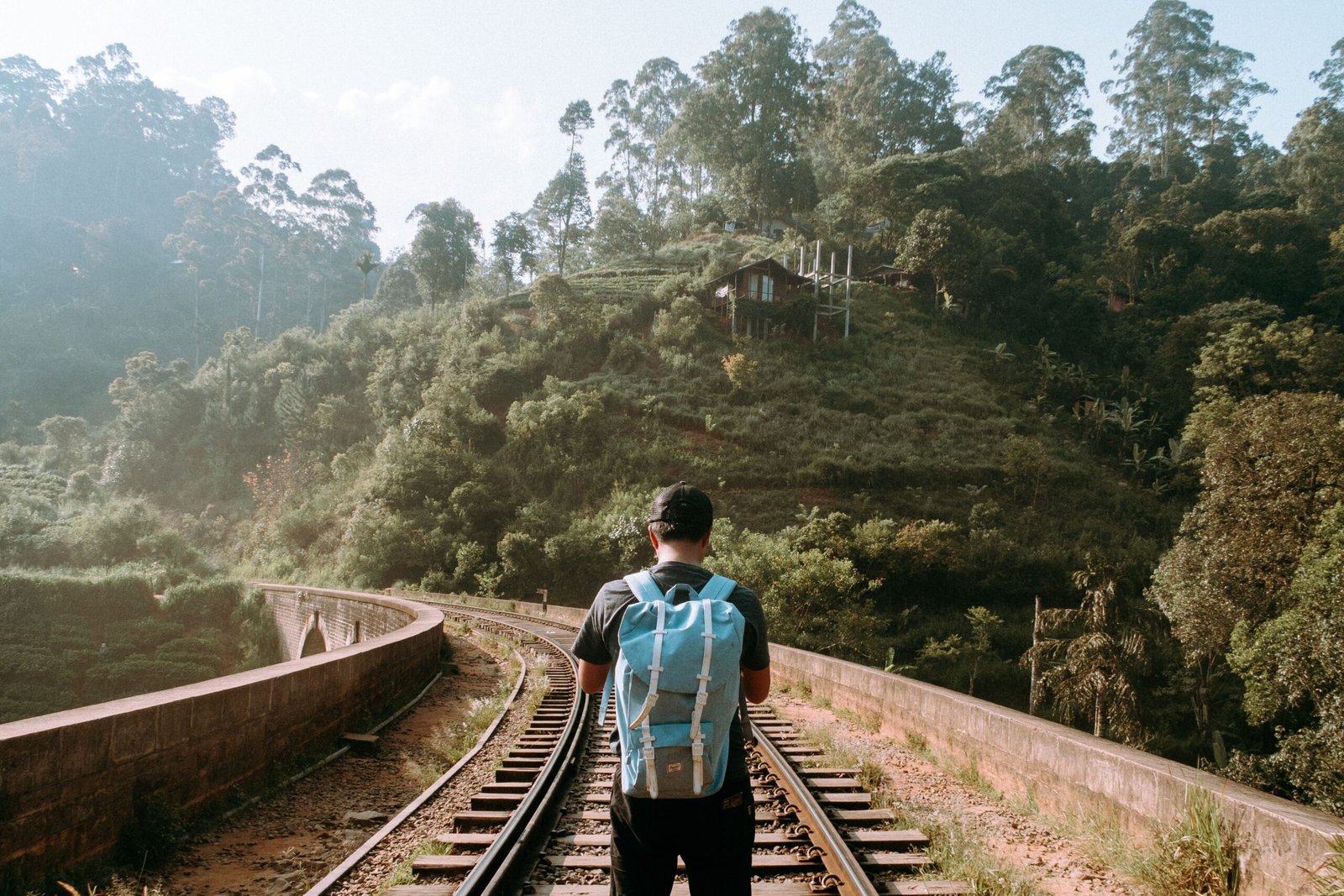
- Days 9 to 10: Ella. Take the scenic train from Nanu Oya, then climb Little Adam’s Peak and, if you have the legs, Ella Rock.
- Days 11 to 12: Udawalawe or Yala, then the south coast. Go on safari, then surf, dive or look for whales.
For a longer stretch of the Pekoe Trail, add a few days. For a week, drop one region. We wouldn’t squeeze all of this into fewer than ten days unless you don’t mind long drives.
A note on the train: the line between Kandy and Nanu Oya is still closed after Cyclone Ditwah, so the scenic ride begins at Nanu Oya. Our guide to scenic train rides in Sri Lanka has the details.
When is the best time for an adventure holiday in Sri Lanka?
There is no single best month, because each activity keeps its own calendar. Roughly:
- Hill country hiking: December to April, when the skies are clearer. Ella, Horton Plains and the Knuckles also work from July to September.
- Adam’s Peak: about December to May.
- Rafting at Kitulgala: best from May to December, though water levels vary.
- Surfing: May to September on the east coast, November to April on the south and west.
- Kitesurfing at Kalpitiya: May to October.
- Whale watching: November to April.
- Safaris: February to July for leopards at Yala, and Udawalawe is good all year.
- Diving: November to May on the south-west coast, April to October on the east.
October and November are the hardest months to plan around. Rain is common, hill trails turn slippery and the leeches come out, so save the trekking for another trip.
What should you know about adventure holidays after Cyclone Ditwah?
Cyclone Ditwah brought landslides and flooding to the hill country in late November 2025. Some trails and sites were closed or restricted afterwards, including sections of the Pekoe Trail and parts of protected areas such as Horton Plains and the Knuckles. Repairs have carried on and many routes have reopened, but the picture varies from valley to valley. The railway from Nanu Oya to Ella is running, while the stretch from Kandy to Nanu Oya is not.
Before you set your heart on a particular trail, ask your operator for its current status, and be ready to swap in an alternative if a section is closed.
Is it safe to do adventure activities in Sri Lanka?
It is, provided you go with good operators and use common sense. The precautions are unglamorous but worth observing every time:
- Pick licensed, experienced operators, and check they supply helmets, life jackets and trained guides for rafting, canyoning, diving and surfing.
- Read your insurance. Plenty of standard travel policies exclude adventure sports or high-altitude hiking, so make sure yours covers what you have planned.
- Check conditions on the day. Water levels, surf, rip currents and trail conditions can change fast.
- Respect the heat. Start early, carry plenty of water and build in rest.
- Take a guide on longer or remote trails, especially after heavy rain, when landslides are a risk.
- Give wildlife space. Keep your distance from elephants and other animals, and stay in the vehicle on safari.
For a wider look at scams, health and sea safety, see Is Sri Lanka safe to visit in 2027?
What should you pack for an active holiday in Sri Lanka?
- Lightweight, quick-drying clothes and a waterproof jacket
- Sturdy hiking shoes or trail runners, plus sandals for water activities
- A proper warm layer for pre-dawn summits and early boat rides
- A sun hat, sunglasses and high-factor sunscreen
- Insect repellent, and leech socks if you are trekking in the wet season
- A small first-aid kit, seasickness tablets and any regular medication
- A reusable water bottle and a dry bag
- Swimwear and a rash vest
FAQ
Yes. You can hike, raft, surf, dive, cycle and go on safari within a small area, and most activities suit beginners if you go with a guide.
It depends on your appetite, but hiking in the hill country combined with white-water rafting at Kitulgala is the most popular pairing. Many travellers add a safari or a surf lesson on top.
Sri Lanka is an all year round destination. December to April suits hiking and beach holidays on the south and west coasts, and May to September is best for the east coast and its surf. Each activity has its own season, so plan around what matters most to you.
Ten to fourteen days is ideal. A week can work if you stick to one or two regions.
Not especially. Many activities need only a reasonable level of fitness, and there are gentler alternatives to the harder hikes, such as Little Adam’s Peak in place of Ella Rock. The heat and humidity make everything feel tougher, so start early and build up gradually.
Yes. Rafting, cycling, safaris, snorkelling and easier hikes all work well, though operators usually set minimum ages for some activities (often around ten for rafting), so check before you book.
It is a long, steady staircase of more than 5,000 steps that most people take three to five hours to climb. It is tiring rather than technical, and the cold at the summit surprises many people, so bring a warm layer. A weeknight in March or April tends to be quieter than a January or February weekend.
Yes. Weligama on the south coast is known for gentle waves and plenty of surf schools, and Arugam Bay has beginner-friendly spots too. Most surf towns offer lessons.
It is generally safe with a licensed operator that provides helmets, life jackets and trained guides. The rapids at Kitulgala are mostly grade 2 and 3, and water levels affect how lively they are, so ask what to expect on your date.
Yala is best for leopards but can be crowded around sightings. Udawalawe is the more reliable and usually quieter choice for elephants, and Wilpattu offers the most solitude. Many travellers combine two parks.
Parts of it are, but some sections were hit by landslides after Cyclone Ditwah. Check the current status of the stages you want to walk before you go.
Plan your Sri Lanka adventure holiday with Destinations Plus
The best adventure trips are built around the season, your fitness and how much you actually want to do each day. If you would like help planning an active or adventurous Sri Lanka holiday, get in touch with Destinations Plus and tell us what you would like to try. You can also browse our Sri Lanka adventure holidays page for trip ideas.